

Cats are captivating creatures, navigating their world with an arsenal of senses far superior to our own. While we rely heavily on sight, a cat’s perception is a symphony of smell, sound, touch, taste, and balance, allowing them to thrive as hunters, explorers, and, of course, cuddle champions.
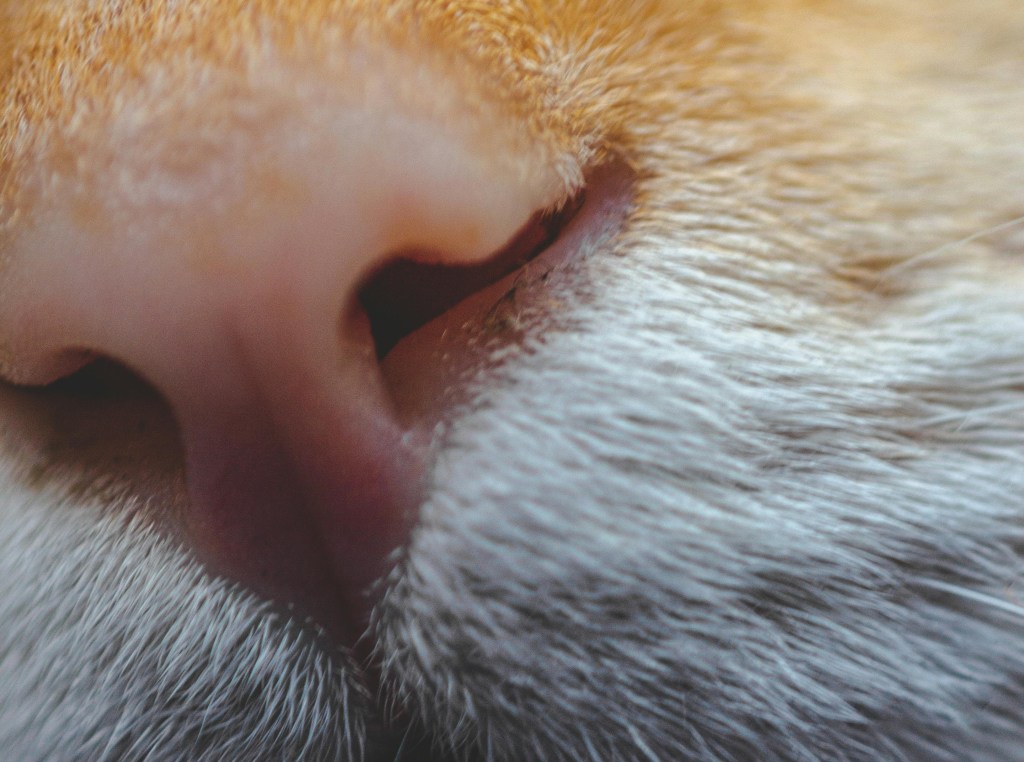
Smell: The King of the Senses
- With an estimated 200 million odor-detecting cells in their noses (compared to a measly 5 million in humans), they can decipher the world in intricate detail [Source: Hill’s Pet Nutrition]. This translates to superior food evaluation, identification of feline friends and foes, and deciphering emotional states through pheromones.
- They use scent marking as a form of communication, leaving scent cues to establish territory boundaries and convey social information.
- Their sense of smell plays a crucial role in hunting, allowing them to track and locate prey with precision even in complex environments.

Vision: Seeing in the Dark (Mostly)
- Cats possess exceptional vision suited for both day and night hunting.
- Special structures in their eyes, called tapetum lucidum, reflect light back through the retina, allowing them to gather more light particles.
- Their eyes contain a high concentration of rod cells, allowing them to see in low light conditions.
- Cats have a wider field of view than humans, enabling them to detect movement from various angles.
- While their color vision is limited compared to humans, they excel in detecting motion and tracking prey with precision.

Hearing: Hearing the Unheard
- A cat’s ears are like satellite dishes that can rotate 180 degrees and move independently from each other, to help them work out which direction a sound is coming from.
- Their hearing range surpasses both humans and dogs, detecting high-frequency sounds like squeaking mice or rustling prey. This acute sense allows them to stay alert to potential dangers and opportunities for a playful pounce.
- A cat’s hearing is finely tuned, with the ability to detect high-frequency sounds beyond the range of human hearing.
- Their ears are equipped with 32 muscles, allowing them to swivel and pinpoint the source of a sound accurately.
- They can distinguish subtle differences in pitch and tone, making them adept at recognizing familiar voices and identifying prey movements.

Whiskers: Touch Beyond the Paw
- Cats have sensitive whiskers (vibrissae) located on their face, legs, and other parts of their body, which serve as touch-receptors.
- Whiskers help cats navigate their surroundings, judge distances, and detect changes in airflow, enhancing their spatial awareness.
- Cats use touch to communicate with other cats and humans, expressing affection through head bumps, kneading, and grooming behaviors.
- Their sensitive paw pads enable them to detect textures, temperatures, and vibrations, facilitating their exploration and interaction with their environment.

Taste: Not Quite Up to Snuff
- While cats have fewer taste buds than humans, they still possess preferences for certain flavors, particularly those with a strong meaty or savory taste.
- Their sense of taste helps them discern the freshness and nutritional value of food, guiding their dietary choices.
- Cats rely more on their sense of smell and texture when evaluating food, emphasizing the importance of aroma and mouthfeel in their eating experience.
Understanding a cat’s sensory world unlocks a deeper appreciation for their remarkable abilities. From the silent stalk of the hunt to the delicate grooming ritual, each action is guided by this incredible sensory toolkit. So next time your feline friend sniffs the air with intense focus, remember, they’re experiencing a world far richer and more nuanced than we can ever imagine.
 CatBox
Leave a comment