
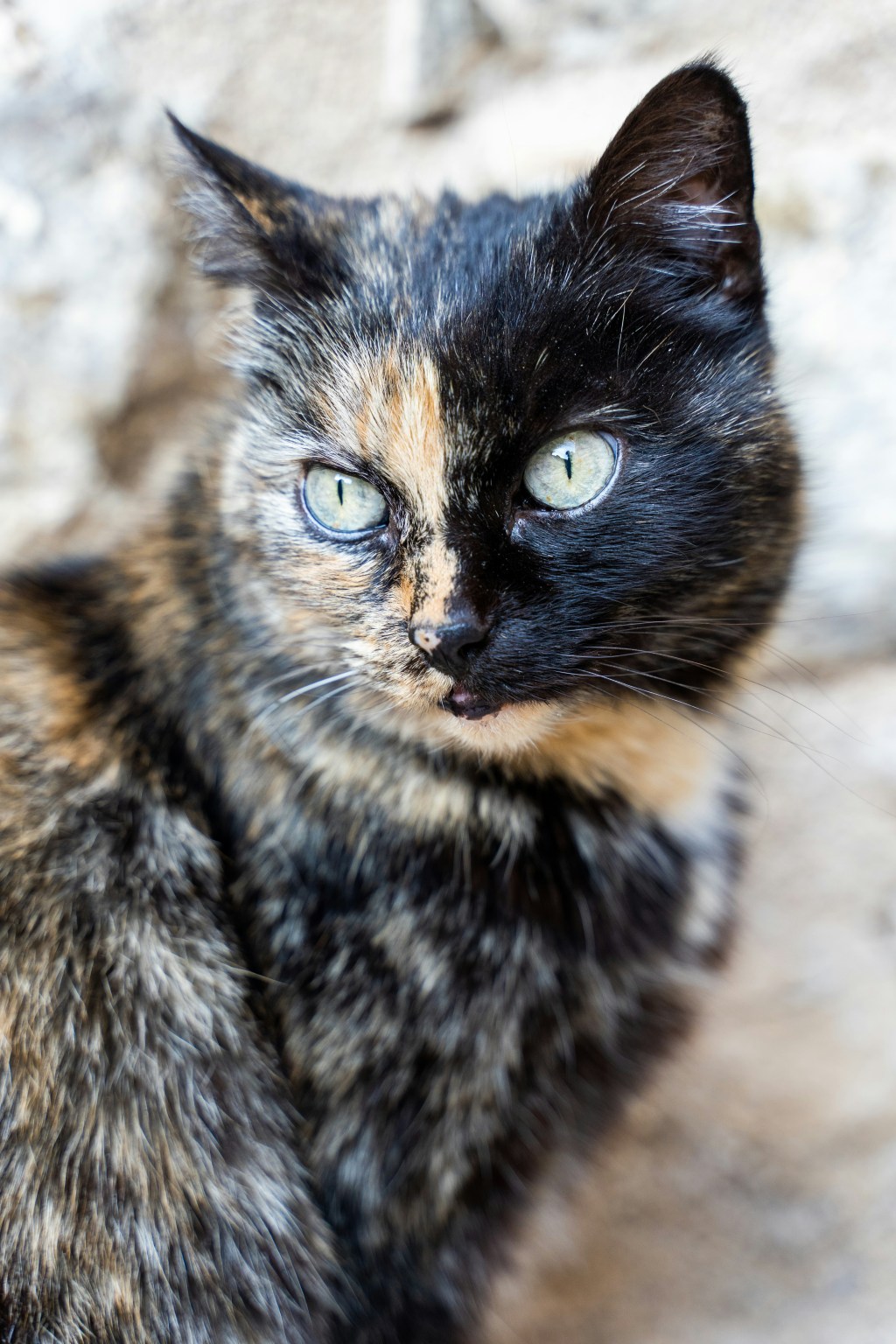
Calling all cat lovers, especially those who live with a sassy firecracker with a coat that could rival a sunset! Today, on April 17th, we celebrate the one and only: Tortoiseshell Cat Appreciation Day!
That’s right, it’s a day dedicated to those stunning kitties with fur that’s a mesmerizing mix of orange, black, cream, and sometimes even a sprinkle of gold. Their striking appearance makes them stand out as some of the most visually captivating cats in the feline world.
But Tortoiseshell appreciation goes way beyond their gorgeous coats. These feline friends are known for their spicy personalities, independent spirit, and a whole lot of love (on their own terms, of course).
So, whether you’re a seasoned Tortie tamer or just a curious cat admirer, let’s learn more about these one of kind kitties.
“Tortie” is not a specific breed of cat. It’s short for “tortoiseshell,” which is a coat pattern that can occur in many different breeds of cats.
A Crash Course in Calico Confusion
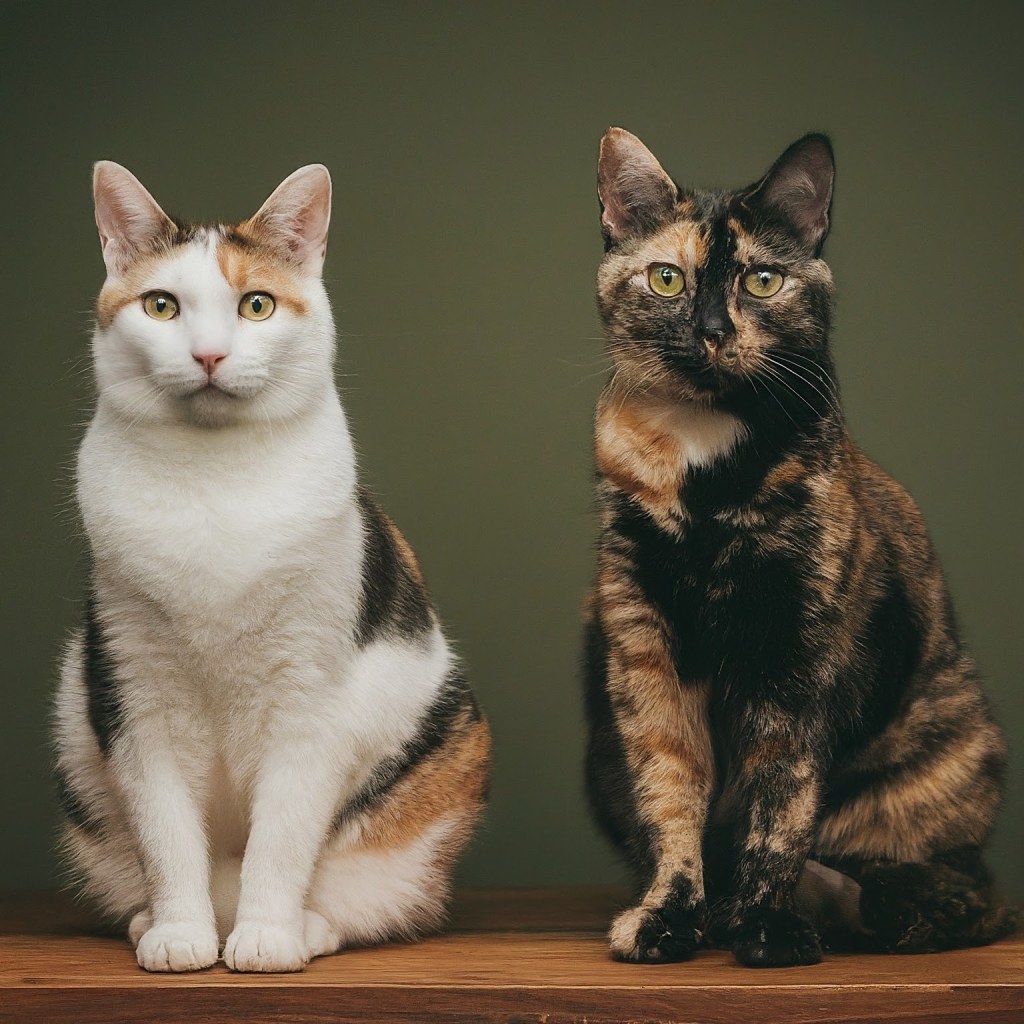
First things first, let’s clear up a common misconception. Tortoiseshells are often confused with their equally stunning cousins, Calico cats. Both have a mesmerizing patchwork of colors, but there’s a key difference:
- Torties: Have a double colored coat, typically black and orange, all mixed together in a marbled pattern. There’s no white present on a true tortie.
- Calicos: Have coats of three colors – black, orange, and white. The white patches can be large and dominant or intermixed with the colored areas. The black and orange patches themselves often resemble a tortie pattern, but the white sets them apart.
Decoding the Tortoiseshell Cat Coat
The secret to the unique tortoiseshell coat lies in the genes, particularly those cozying up to the X chromosome! You see, female cats boast a pair of X chromosomes (XX), while males sport one X and one Y chromosome (XY).
On that X chromosome is the magic recipe for coat color. One X carries the orange gene, while its partner flaunts the black gene. As the kitten develops, one of these X chromosomes gets “turned off” in each cell, creating those stunning patches of fur in different hues.
Since male cats have only one X chromosome, they can only be either orange or black, not both. But the ladies, with their double X chromosomes, have the chance to inherit both, giving them that fabulous tortoiseshell coat!
Are All Torties Female?
While rare, male tortoiseshell cats do exist! It requires a genetic twist. Normally, males have XY chromosomes, and females XX. But some male torties have an extra X chromosome (XXY), similar to a condition in humans called Klinefelter syndrome. This extra X allows for the random inactivation that creates the black and orange patches, just like in females. It’s uncommon though, about 1 in 3000, and these special male torties are usually infertile.
A Washed Out Tortie?
Have you ever seen a tortie that looks like it has been through the wash a few times and has faded? A dilute tortoiseshell has a double colored coat but, unlike standard torties, which boast coats blending orange and black fur, dilute torties display a different palette. These kitties inherited a recessive gene that is responsible for muting their colors. Their double-colored coat features a more subdued color scheme, often presenting hues of blue and yellow.
Is There A Secret Behind the Sass?
Okay, let’s talk about the real reason we’re here: Tortitude!
You’ve probably heard about tortoiseshell cats having a reputation for being sassy, independent, and a bit unpredictable. But is there any truth to it, or is it just a stereotype?
A study from the University of California-Davis vet school looked at over 1,200 cat owners’ experiences with their furry friends. It found that tortoiseshell and calico cats, along with gray-and-white and black-and-white cats, were more likely to show feisty behaviors like swatting, hissing, scratching, or even biting during interactions with humans.
While this study suggests there might be something to the idea of “tortitude,” it’s important to keep in mind that it was based on what cat owners observed and could be influenced by the general reputation of tortoiseshell cats.
One interesting theory is that because the gene for tortoiseshell coat color is linked to females, who are often seen as more independent than males, it could contribute to their unique personality traits.
Another idea suggests that the same genes responsible for coat color might also influence behavior but there’s no solid proof yet of a genetic link between coat color and personality. While these theories are just educated guesses at this point and more research is needed, they do give us some cool ideas about what might make tortoiseshell cats’ personalities so unique.
So, while we can’t say for sure if tortitude is a real thing, there’s definitely some evidence and theories that suggest tortie’s might just have a little extra spark in their personalities.
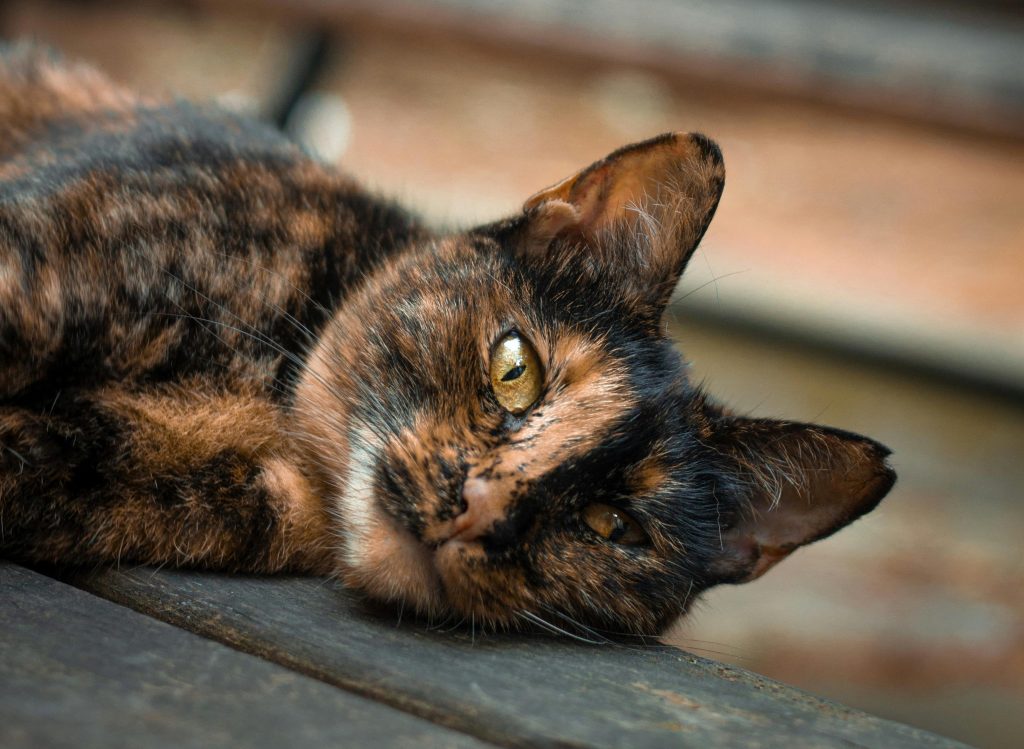
Sharing your life with a Tortie is a constant adventure filled with laughter, purrs, and maybe a few playful swats. So, let’s celebrate these stunning creatures every day, not just on Tortoiseshell Cat Appreciation Day! After all, the world needs a little more Tortitude in it.
Do you have a Tortie in your life? Share your stories and photos in the comments below!
 CatBox
Leave a comment