
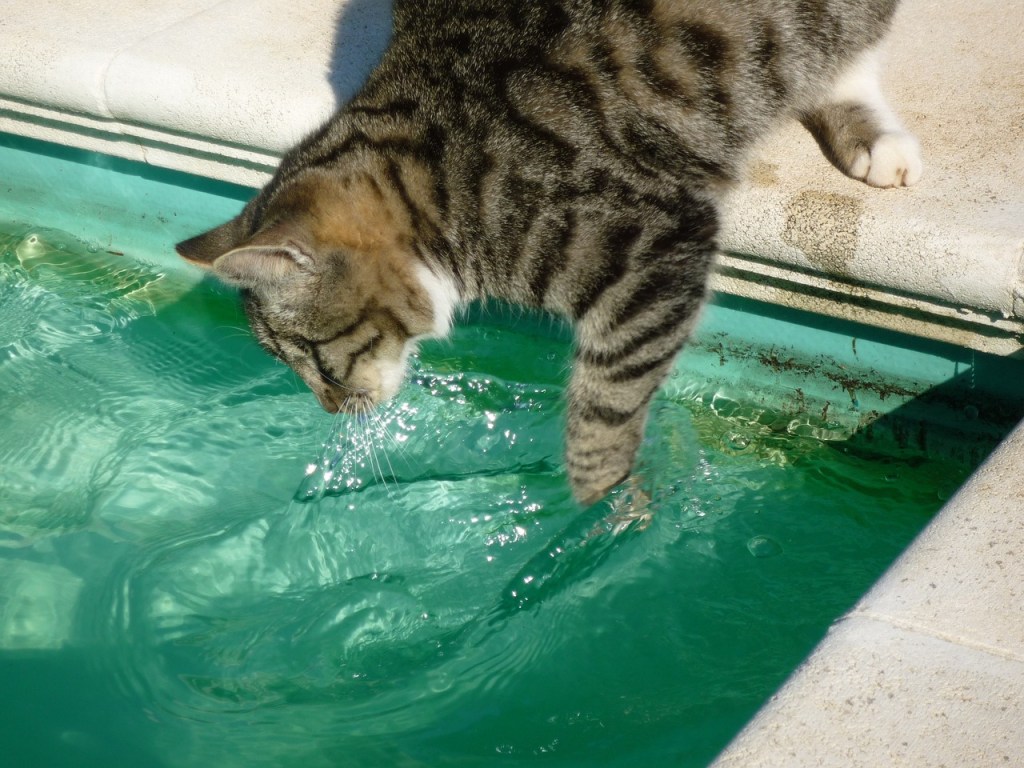
Having a pool is a wonderful privilege, but it’s also a big responsibility, especially if you have pets in the house. Cats, in particular, can have a habit of trying to drink water from the pool, leaving many owners concerned for their health. So, can cats drink pool water? And what are the risks? Find out in this guide.
Why Does My Cat Drink from the Pool?
Why do cats do anything? They’re such mysterious creatures, even the brightest minds of animal science often struggle to figure out their true intentions and ideas. As to why they like to drink from pools, it’s hard to say. More often than not, they’re just curious, and thirsty, which makes them easily attracted to a big, shimmering pool of seemingly clean, clear water.
It’s also true that many cats, for some reason, aren’t fans of drinking out of typical pet water bowls. In some cases, the metal or other material of the bowl can bother their whiskers as they lean down to lap up the water, or the shape of the bowl might frustrate them. That’s why you often see cats going out and licking from puddles or pools instead.
Chlorine in Pool Water and Its Effects on Cats
So, how dangerous is it if a cat drinks from a pool? Well, firstly, it depends on the pool type. There are saltwater pools and there are chlorinated pools. Chlorinated pools are generally the more dangerous option, as they have high levels of chlorine, which can not only irritate a pet’s eyes and skin, but also poison them if ingested in large quantities.
How chlorine can be harmful to cats if ingested
If cats lap up chlorinated water in small quantities, they shouldn’t have too many issues. However, the more they drink, the worse the situation can become. If they ingest too much, dangerous levels of chlorine can accumulate in their bodies, leading to possible cases of poisoning and some very nasty symptoms:
- Gastrointestinal issues: You can usually spot a case of a cat drinking too much chlorinated water by the presence of gastrointestinal problems, like vomiting, diarrhea, bloating, and stomach pains. This can be very unpleasant for a cat to experience, and veterinary care may be required in the more moderate to severe cases.
- Respiratory problems: Cats who drink chlorinated water can also suffer respiratory problems. They may experience shortness of breath or general difficulty breathing, which can be very stressful for owners to see. It’s vital for cats who are having a hard time breathing to receive urgent veterinary attention.
Saltwater Pools and Their Risks
Clearly, chlorinated pools are pretty bad for cats, but how do saltwater pools compare? Well, one of the benefits of a saltwater pool is that it doesn’t contain the same high levels of chlorine compared to chlorinated pools. Instead, as the name implies, saltwater pools have lots of salt in them (about 10% of the salt content of seawater) which is used to kill bacteria and keep the water safe and clean.
However, even though saltwater pools are safer for animals in many ways, they still have some risks that need to be taken into account. If a cat drinks a lot of salty water, for example, the high salt content may cause the animal to feel even thirstier than before. They may then start drinking even more pool water as a result, and the salt levels will simply get higher.
It’s even possible for a cat to ingest so much sodium that it starts feeling very ill, with similar stomach pains, vomiting, and other symptoms, just like with chlorinated pools. That’s why you still need to be careful and supervise your pets, even if you have a saltwater pool, as risks are still present.
Steps to Keep Cats Safe
Here are a few key steps to keep cats safe around pools:
- Supervise them at all times so you can stop them from drinking the water if you notice them leaning down and lapping it up.
- Provide lots of fresh water drinking bowls and other sources around the home and near the pool area.
- Invest in accessories like a pool cover to cover up the water when the pool isn’t in use. This will also reduce the risk of accidents, like a cat slipping into the water.
What to Do If a Cat Consumes Pool Water
If you see your cat consume pool water, try to stop them quickly. In small doses, the water shouldn’t do any major damage, so just keep an eye on your pet to begin with and look for any signs of strange behavior or symptoms. If you notice symptoms like bloating or vomiting, contact
a veterinarian right away.
Overall, the main thing to know about pool water for pets is that it’s not safe, especially in big doses. Little amounts aren’t anything to worry about, but if cats drink too much, they can get very ill. It’s up to pool and pet owners to be responsible and look after their furry friends to prevent any disasters.
 CatBox
Leave a comment